.png)

Back To Blogs
January 20, 2026
Joe Averill
5 minutes
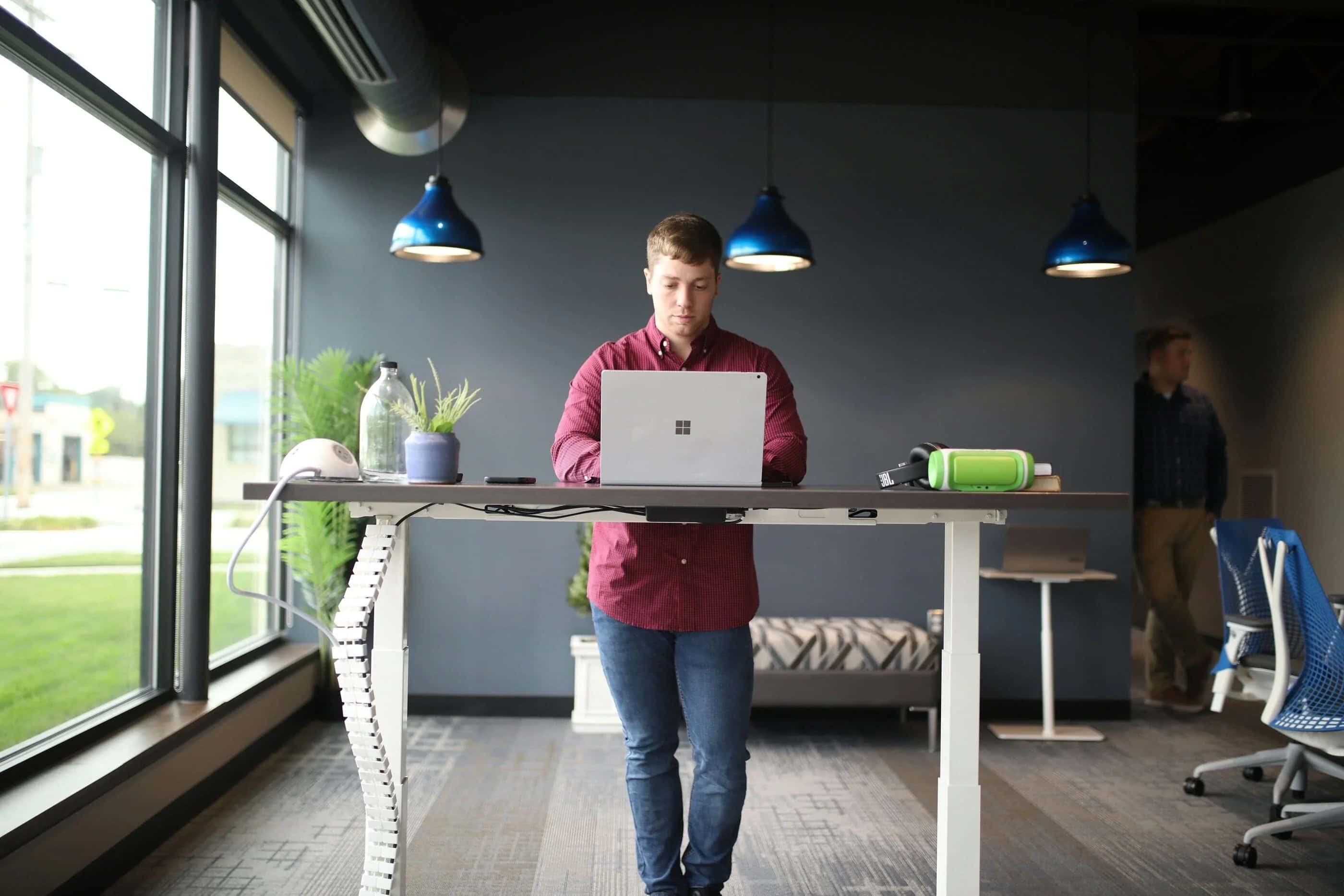
Office with standing desks lets your team choose how they work—sitting, standing, or switching throughout the day. No more being locked into the same position for eight hours.
Research links prolonged sitting to health problems. But beyond the science, it's simple: people who can move feel better and work better.
The average office worker sits for 10+ hours a day. Commute. Desk. Meetings. Desk again. It adds up.
Standing desks don't mean standing all day. They mean choice. Sit when you want. Stand when you need a change. Move between the two as your body and focus require.
Teams with access to standing desks report:
For companies competing for talent, ergonomic options signal that you care about wellbeing. It's a small thing that makes a noticeable difference.
Not all standing desk setups are equal:
Sit-stand desks (adjustable)
The best option. Electric or manual adjustment lets each person find their ideal height and switch throughout the day. Look for desks that adjust smoothly and remember height settings.
Fixed standing desks
Standing only. Less flexible—you can't sit when you need to. Usually found as additional stations rather than primary workspaces.
Standing desk converters
Platforms that sit on top of regular desks. A cheaper solution but takes up desk space and feels less integrated. Common in offices that retrofitted standing options.
Monitor arms
Often paired with sit-stand desks. Allow screen height adjustment independent of desk height. Important for proper ergonomics at both sitting and standing positions.
More common than five years ago, but far from standard.
Where you'll find them:
Where you probably won't:
If standing desks matter to your team, you'll need to ask specifically. Don't assume they're included—and don't assume they're not available.
Some serviced offices include sit-stand desks as standard. Others offer them as upgrades. Many don't have them at all.
Questions to ask:
Upgrade costs vary. Some providers charge £30-50 per desk per month. Others include them free for longer commitments. A few have already made them standard across all desks.
Learn more about serviced offices
If the office doesn't have standing desks, you have options:
Use the existing setup
Accept what's there. Fine if standing desks are a nice-to-have rather than essential.
Request an upgrade
Many serviced and managed offices will swap furniture for a price. Ask what's possible before assuming the answer is no.
Bring your own
In some offices, you can supply your own desks. More common in managed offices and traditional leases. Check what's allowed—some serviced offices won't permit tenant furniture.
Desk converters
The compromise option. You can often add converters to existing desks without landlord approval. Less elegant, but functional.
For a traditional lease, you're buying your own furniture anyway. Budget £400-800 per quality sit-stand desk, more for premium brands.
Compare office types: Serviced vs Managed vs Lease
Standing desks help. But they're part of a bigger picture:
If you care about standing desks, you probably care about these too. Look at the full workspace, not just one feature.
We only represent tenants. Our service is 100% free.
Tell us what your team needs—including standing desks and other ergonomic requirements—and we'll find offices that actually deliver. We know which providers include them standard and which charge extra.
You only pay when you sign a lease on a space you want.
Want to find your next leased, managed or serviced office space to rent? Book a call with our team today.


.jpg)