.png)

Back To Blogs
December 10, 2025
Joe Averill
5 mins
Hybrid work has shifted from being a temporary response to becoming a long-term business model. Across Manchester, companies are redesigning their office strategies to support employees who split time between home and the workplace.
This transition has created new pressures on leadership. CEOs must align real estate with growth strategies. CFOs must balance cost savings with financial predictability. Chiefs of People must ensure the office remains a hub for collaboration and culture.
Manchester is a key city in this transformation. With the UK’s largest economy outside London, a strong university pipeline, and a thriving technology and creative sector, the city is a natural testbed for hybrid workplace solutions.
Hybrid work reshapes not only how often employees come into the office, but also how offices are designed and used.
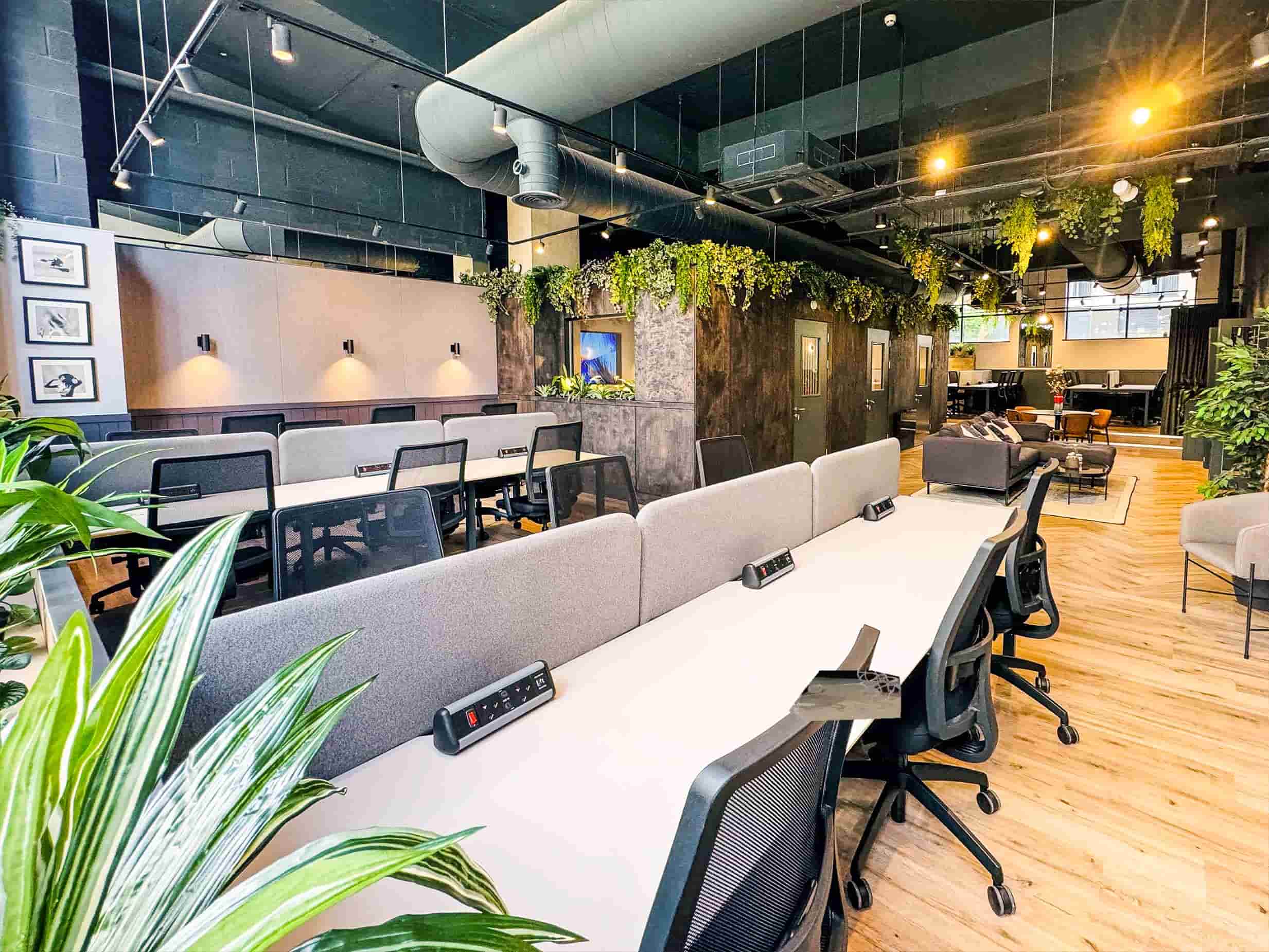
Traditional layouts with rows of desks are no longer effective. Hybrid teams need spaces that can switch between focused work and team collaboration. Flexible layouts that combine hot desks, breakout areas, and quiet zones provide balance for both styles of work.
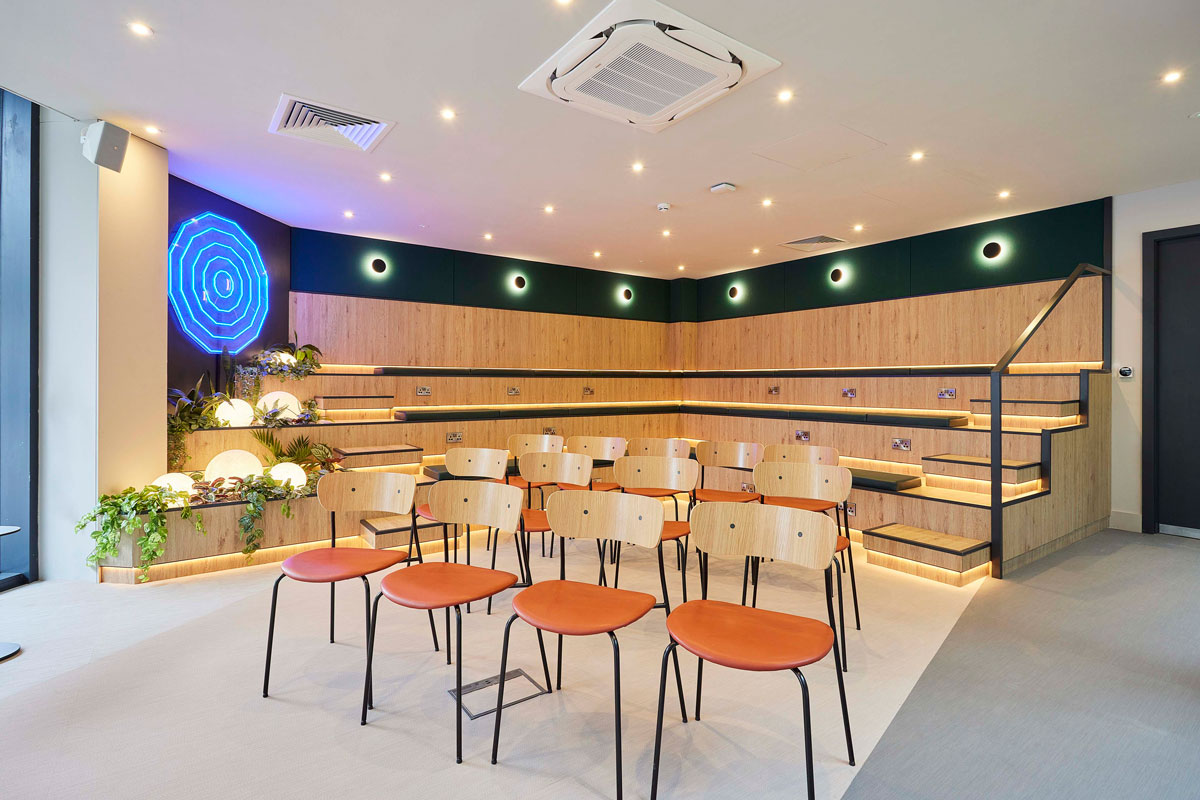
With many meetings including both in-person and remote participants, office meeting spaces need to be technology-enabled. This means larger screens, reliable video conferencing, and acoustic design that minimises background noise. A small detail like good lighting or soundproof booths makes a big difference in hybrid collaboration.
Booking systems for desks and meeting rooms are essential in hybrid offices. They help teams avoid overcrowding on busy days while ensuring space is used efficiently. Smart building systems also provide valuable data about occupancy, energy use, and space utilisation, helping leadership make informed decisions.
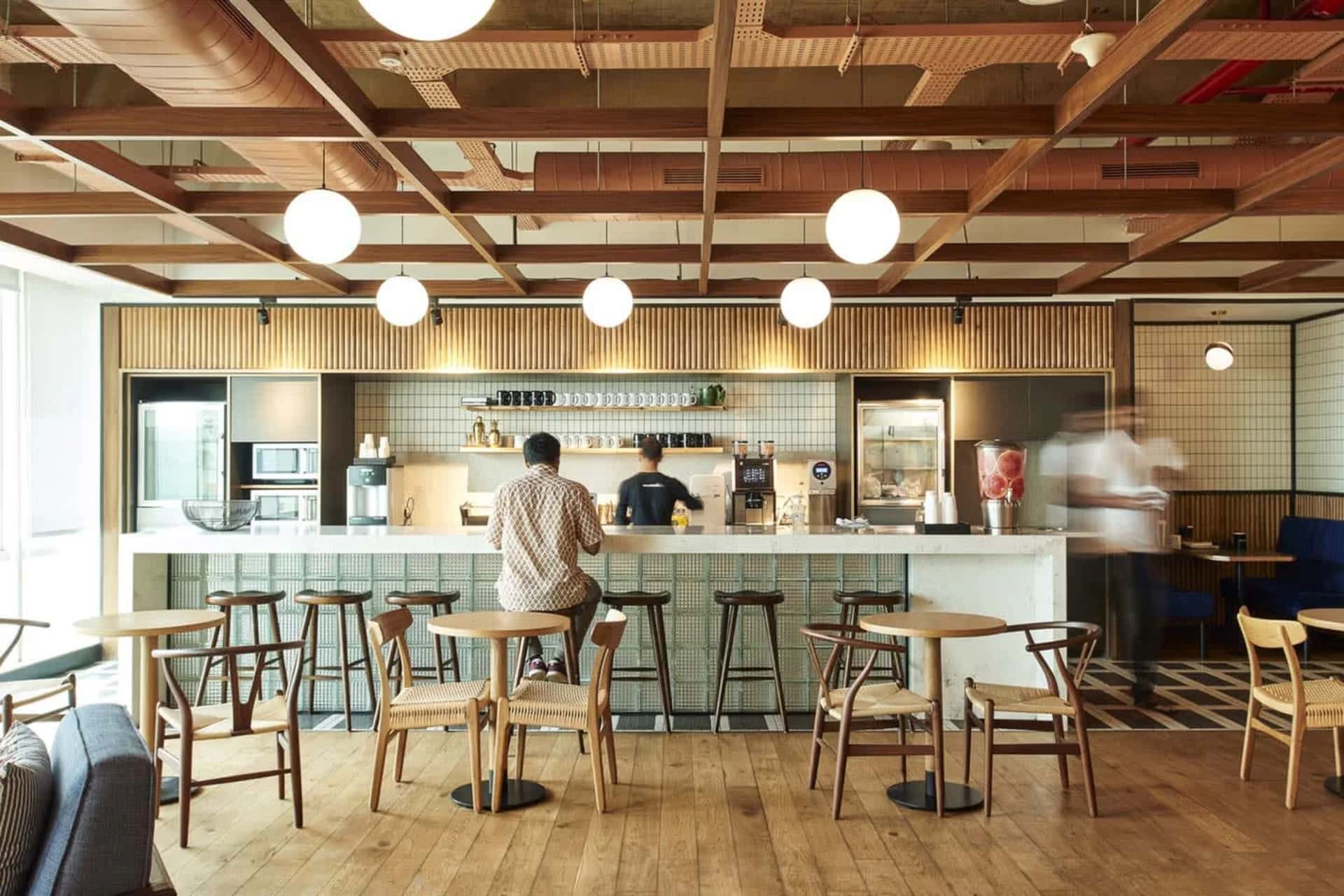
If employees are coming into the office fewer days a week, those days need to deliver value. Amenities such as cafes, wellness rooms, and collaborative lounges turn the office into a place employees actively want to be. These features build culture, strengthen teams, and differentiate one employer from another in a competitive job market.
Hybrid work also transforms the financial model for office space.
Many companies reduce their square footage because not every employee needs a dedicated desk. Instead of paying for 100 desks for 100 staff, companies may need only 60 desks with flexible booking systems.
Serviced and managed offices support this shift by offering contracts that scale up or down as needed. This helps CFOs avoid paying for unused space while still maintaining access to high-quality facilities.
By contrast, long leases can leave businesses exposed. With hybrid working reducing average office attendance, companies locked into large leased spaces may find themselves paying for rooms that sit empty.
A hybrid approach creates opportunities for cost certainty. All-inclusive serviced and managed offices in Manchester often bundle utilities, maintenance, and amenities into one predictable fee. This contrasts with leased offices where costs can fluctuate based on service charges, repairs, and energy use.
The office is no longer simply a place to sit at a desk. For many employees, the office is now a hub for collaboration, culture, and connection.
Amenities play a critical role in attracting staff back into the workplace. A well-designed hybrid office offers more than Wi-Fi and meeting rooms. Features such as wellness programmes, roof terraces, or community events can strengthen employee morale and loyalty.
Companies that invest in high-quality hybrid offices also gain an edge in recruitment. Younger talent, in particular, often evaluates employers on both work-life balance and workplace environment. An office that supports flexibility, social connection, and wellbeing signals that the employer is serious about its people.
The hybrid workplace reshapes decision-making for every senior role.
Hybrid work reduces overall space requirements, but CFOs must weigh those savings against investments in high-quality spaces. Employee experience now has direct financial value because it impacts recruitment and retention.
Hybrid models require new operational processes. From desk booking systems to cleaning schedules, COOs must ensure the office supports variable occupancy without creating inefficiency or frustration.
The office has become a tool for culture. Chiefs of People must ensure that hybrid offices are more than functional. They must also inspire employees to come in, collaborate, and feel part of a shared mission.
For CEOs, the office is a strategic asset. Choosing between serviced, managed, or leased space in Manchester impacts cost structure, brand perception, and long-term growth plans. CEOs must ensure the office aligns with both business performance and company culture.
One Manchester-based tech company with 50 employees moved from a long lease into a serviced office in Ancoats. By reducing the number of dedicated desks and introducing a booking system, they cut costs by 25 percent while improving employee satisfaction.
A professional services firm with 120 staff shifted to a managed office near Spinningfields. They gained control over branding and layout while keeping contracts flexible to adapt to changing headcount.
A corporate with 300 employees consolidated multiple floors into a smaller footprint in St Peter’s Square. They introduced shared desk policies and reallocated the savings into premium wellness amenities and staff development programmes.
Hybrid work is here to stay, and Manchester’s office market is adapting rapidly.
Demand for shorter leases and flexible terms is rising, as companies prioritise adaptability in uncertain economic conditions. Operators offering serviced and managed space are gaining ground on traditional landlords.
Sustainability is becoming a decisive factor. Offices with eco-certifications are increasingly attractive to companies with ESG commitments. Buildings like Windmill Green, with BREEAM Outstanding ratings, are setting new standards.
Technology will also reshape the office. AI-powered systems will predict space demand, improve energy efficiency, and enhance collaboration between in-office and remote employees. These tools give executives new ways to optimise both cost and culture.
· Hybrid work reduces the need for dedicated desks and increases demand for flexible office models.
· Serviced and managed offices in Manchester provide cost certainty and adaptability for hybrid teams.
· The office is shifting from being a space for daily attendance to a hub for collaboration, culture, and talent attraction.
· Executives across finance, operations, and people management must treat office strategy as a core part of business planning.
Hybrid work has changed the role of the office. In Manchester, leaders now view their workspace as a strategic tool for growth, culture, and efficiency. Choosing the right model; serviced, managed, or leased, will define how well a company adapts to this new reality.
Want to find your next leased, managed or serviced office space to rent? Book a call with our team today.