.png)


Back To Blogs
February 25, 2026
Joe Averil
8-12 minutes
Green building certifications have shifted from aspirational to essential in the UK commercial property market. BREEAM Excellent and Outstanding buildings now account for 59% of London office acquisitions, while uncertified stock faces vacancy rates approaching 27% — a gap that will widen as MEES regulations tighten toward an EPC B requirement by the early 2030s.
The UK green building market reached $7.3 billion in 2025 and is projected to hit $17.1 billion by 2033 (CAGR 11.1%), driven by regulatory mandates, tenant ESG commitments, and demonstrable rental premiums of 5.5–15% for certified buildings.
This guide covers the differences between BREEAM, LEED, WELL, NABERS UK, and SKA Rating — the five certifications most relevant to UK commercial property — along with emerging standards, regulatory context, and comparison data.

Certified buildings outperform uncertified stock across every financial metric that matters to landlords and investors. The evidence base is large and growing:
Rental premiums are well-documented across multiple sources. JLL's global research shows green-certified offices command premiums of 7.1% to 11.6%. Savills Q4 2024 data for Central London found BREEAM Excellent or Outstanding buildings achieving rents 15% higher than lower-rated or unrated stock.
A 42-study meta-analysis by Dalton and Fuerst (covering 2008–2016) established an average 6% rent premium and 7.6% sales premium for certified buildings. In Manchester, over 90% of the top 10 rents paid over the past two years were in buildings rated BREEAM Very Good or above.
Capital values follow a similar pattern. JLL's award-winning analysis of 592 Central London office investment deals (2017–2021) demonstrated a clear positive link between sustainability credentials and higher prices. BREEAM-certified buildings reportedly achieve over 20% higher valuations on average.
The "brown discount" is now the dominant market force. McCord et al. (2024) found properties rated EPC E or F suffer 4–7% rental discounts, with G-rated properties facing prohibitive penalties. This effect has intensified sharply since the introduction of MEES regulations. An estimated 65% of office stock is at risk of stranding by 2030 according to JLL analysis, and low-carbon demand in London is projected to exceed supply by 35% by the same date.
Vacancy and occupancy differences are stark. In Central London (Q4 2024), the highest-quality office stock had vacancy rates of approximately 1%, while the lowest-quality stock faced vacancy of around 27% — forecast to rise above 30%. New-build vacancy in Central London reached just 1.2% in Q4 2025, its lowest in five years.
MEES (Minimum Energy Efficiency Standards) currently require all commercial properties to have a minimum EPC rating of E to be legally let, with penalties up to £150,000. The 2020 Energy White Paper confirmed a trajectory toward EPC B by 2030, with an interim EPC C by 2027 milestone. However, as of late 2025, this has not been enshrined in law. CBRE analysis (June 2025) indicates the EPC B deadline will likely land between 2030 and 2035, with the government consultation response expected by end of 2025. The scale of the challenge is significant: approximately 58% of Central London office stock has EPC ratings below B, and around 73% of office spaces in England and Wales could fall below an incoming EPC C requirement.
The UK's legally binding net zero 2050 target (Climate Change Act, amended 2019) drives the broader regulatory direction. The built environment accounts for approximately 25–42% of UK territorial greenhouse gas emissions depending on scope boundaries. The buildings sector must nearly halve emissions by 2030 compared to a 2018 baseline.
Other regulatory forces include TCFD-aligned reporting (the UK was the first G20 country to mandate this in 2022, affecting over 1,300 organisations), SECR (Streamlined Energy and Carbon Reporting, in effect since 2019 for large companies), the UK Anti-Greenwashing Rule (effective 31 May 2024), and evolving UK Sustainability Disclosure Requirements (SDR) with voluntary adoption of ISSB-aligned reporting standards expected from early 2026.
Corporate demand for certified space is accelerating. Knight Frank's (Y)OUR SPACE research found nearly 75% of respondents view ESG ambitions as having a moderate or significant effect on real estate decisions over the next three years, up from just over half in 2021. JLL research (January 2024) showed 50% of UK investors identified occupier requirements as one of the biggest ESG drivers behind acquisition decisions. Over 7,600 companies have signed the Science Based Targets initiative, with 80% joining in the past two years.
In 2024, 73.6% of London's office take-up was Grade A space, and 68% of all transactions involved new or refurbished offices. As Lewis Silkin (2024) noted: "Corporate occupiers are seeking light, airy, green, flexible working spaces to retain and attract employees. ESG goals are at the top of most businesses' agendas."
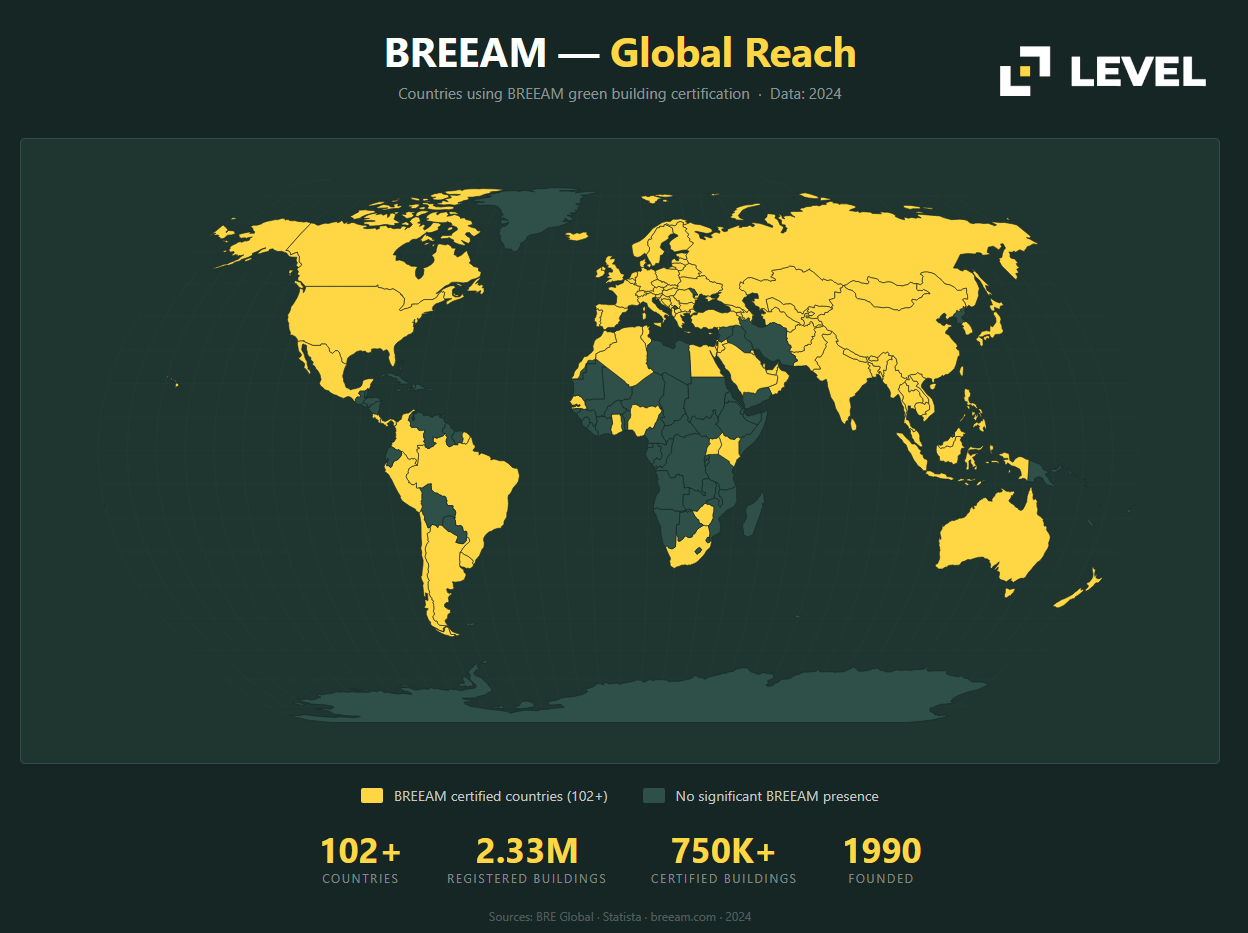
BREEAM (Building Research Establishment Environmental Assessment Method) is the world's longest-established sustainability assessment method for buildings. Developed by BRE (Building Research Establishment) in Watford, England, work began in 1988 with the first version for new office buildings launched in 1990. BRE Global Ltd manages the scheme and is accredited by UKAS.
BREEAM is now used in over 104 countries, with more than 2.9 million registered buildings and over 750,000 certified uildings globally (BRE, 2025 V7 launch data). The scheme is supported by over 14,000 licensed assessors worldwide. Several European countries operate national BREEAM schemes through National Scheme Operators, including the Netherlands, Spain, Norway, Sweden, Germany, Austria, and Switzerland.
BREEAM comprises six technical standards covering the full building lifecycle: New Construction (the primary scheme, now at Version 7), New Construction Residential (formerly Home Quality Mark), In-Use (for operational buildings), Refurbishment and Fit-Out, Communities (for masterplanning), and Infrastructure (formerly CEEQUAL).
A score of ≥70% earns the Excellent rating, indicating best practice in sustainability performance that goes significantly beyond regulatory compliance. Under V7, buildings targeting Excellent must meet minimum energy standards, complete a Life Cycle Assessment (LCA) at least one stage, and perform a TM54-type operational energy analysis. Strong performance is required across all categories including effective water management, waste reduction, and robust construction management.
The cost uplift to achieve Excellent is between 0.4% and 1.8% of total construction cost (Aecom/Sweett Group research), with BRE's own studies finding typically less than 1% additional cost. Knight Frank (2021) research showed BREEAM Excellent offices command a 4.7% rental premium, while RICS found a 16% premium in market value. Many UK local authorities incorporate BREEAM Excellent into planning requirements, and the UK Government's Construction Strategy requires environmental assessment on all public projects aiming for Excellent. New NHS healthcare buildings must achieve BREEAM Excellent.
A score of ≥85% earns Outstanding, representing pioneering best practice — the top 1% of UK new non-domestic buildings. Under V7, Outstanding requires demonstrating steps to eliminate on-site fossil fuel combustion, meeting new daylighting standards, and completing LCA at every project stage. Projects must provide material for a published case study.
The cost uplift for Outstanding can add 5–10% to total construction costs. Knight Frank research showed a 12.3% rental premium for Outstanding-rated offices. The first UK project to achieve a 100% BREEAM score was Nova, Oxford (August 2024) — a 45,000 sq ft R&D facility developed by Wrenbridge and Buccleuch, featuring solar panels generating £44,000 in annual savings, air source heat pumps, and an EPC A+ rating.
Other notable BREEAM Outstanding buildings include Bloomberg's European HQ in the City of London (98.5% score at design stage, the highest ever for a major office at the time), SEGRO 2 Auriol Drive (first industrial refurbishment to achieve Outstanding), and the Northcliffe Building on Tudor Street (a Grade II listed 1920s print works reimagined to achieve Outstanding).
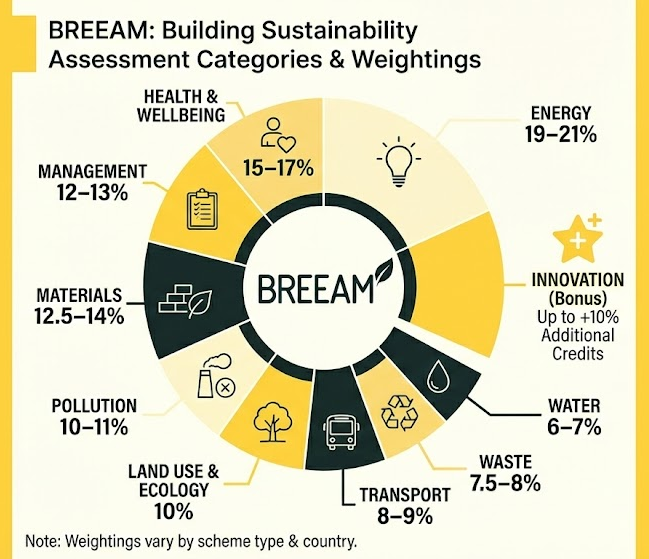
BREEAM assesses buildings across 10 categories (9 core plus Innovation). Energy carries the highest weighting at 19–21%, followed by Health & Wellbeing at 15–17%, Management at 12–13%, Materials at 12.5–14%, Pollution at 10–11%, Land Use & Ecology at 10%, Transport at 8–9%, Waste at 7.5–8%, Water at 6–7%, and Innovation which can add up to 10% additional through exemplary performance credits. Weightings vary by scheme type and country.
BRE registration fees for New Construction start at approximately £280, with certification/QA fees based on gross internal floor area. BRE increased fees by approximately 10% from April 2024, with a further 5–10% increase from May 2025. Assessor/consultancy fees — paid directly to the assessor's organisation — typically range from £5,000–£15,000 for standard projects to £20,000–£50,000+ for complex projects targeting Outstanding. BREEAM In-Use certification costs £870 per asset per Part.
Released to assessors on 16 July 2025 and open for public registration from 30 September 2025, BREEAM V7 represents the most significant update in years. Key changes include expanded Whole Life Carbon requirements (with mandatory LCA for Excellent and Outstanding), a restructured Energy category split into 8 distinct issues with a focus on electrification and elimination of on-site fossil fuels, new daylighting standards including circadian rhythm effects, Biodiversity Net Gain credits aligned with UK legislation, EU Taxonomy alignment, and new minimum standards for higher rating levels. BRE analysis indicates projects typically score 3–5% lower under V7 compared to V6. Registration for V6/V6.1 closes on 27 January 2026.
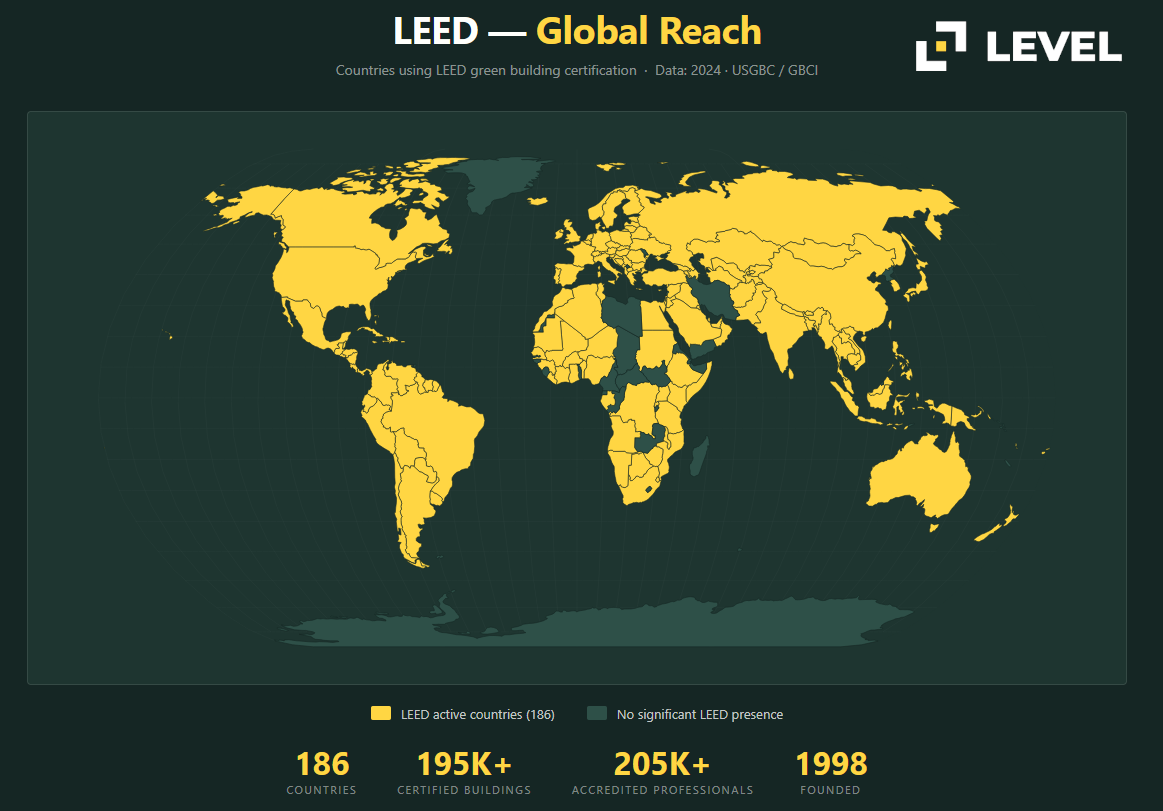
LEED (Leadership in Energy and Environmental Design) was developed by the U.S. Green Building Council (USGBC), founded in 1993. The first version launched in 1998, and the system has since grown to become the most widely used green building rating system globally, with 195,000+ certified buildings across 186 countries and over 205,000 accredited professionals. Certification is administered by Green Business Certification Inc. (GBCI).
LEED uses a points-based system with a maximum of 110 points, across four certification levels: Certified (40–49 points), Silver (50–59), Gold (60–79), and Platinum (80+). Credit categories include Integrative Process, Location & Transportation, Sustainable Sites, Water Efficiency, Energy & Atmosphere (the highest-impact category at up to 33 points), Materials & Resources, Indoor Environmental Quality, Innovation, and Regional Priority.
LEED v5 launched on 28 April 2025 — the most significant overhaul in over a decade. It restructures credits around three impact areas: Decarbonization (50% of all points — a first), Quality of Life (25%), and Ecological Conservation & Restoration (25%). Mandatory carbon assessments, mandatory embodied carbon LCA, and all-electric system credits are now central. Platinum certification now requires specific decarbonization thresholds beyond just reaching 80 points. LEED v4/v4.1 registration remains open until end of Q1 2026.
For UK buildings, v5's decarbonization focus aligns with net zero 2050 targets, its embodied carbon requirements mirror the UK LETI framework, and its all-electric emphasis aligns with the UK's shift away from gas heating.
BREEAM dominates the UK with approximately 80% market share in Europe, but LEED is gaining ground, particularly in London's premium commercial office market. In 2024, around 65% of new Central London office developments achieved at least one green certification (BREEAM, LEED, or WELL). LEED is described as "now common in major London developments."
LEED makes strategic sense for UK buildings when targeting multinational tenants (especially US-headquartered companies), maintaining global portfolio consistency, meeting international investor requirements, or achieving premium market positioning. Bloomberg, which has 38 LEED/BREEAM-certified offices globally, exemplifies the dual-certification approach — its London HQ achieved both BREEAM Outstanding (98.5%) and targeted LEED Platinum.
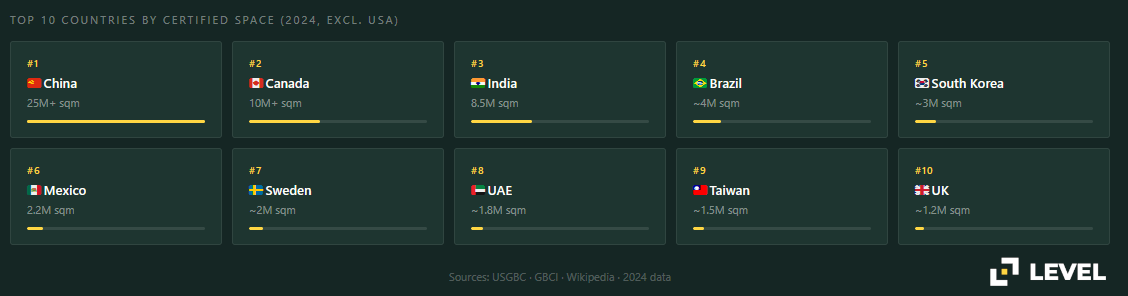
The precise number of LEED-certified buildings in the UK is not prominently published by USGBC, but the UK does not appear in the Top 10 Countries lists, suggesting modest numbers compared to BREEAM's dominance. LEED-certified offices in the UK typically use 25–30% less energy and command 5–15% higher rents.
BREEAM uses a percentage-based scoring system with five certification levels, while LEED uses a points-based system (out of 110) with four levels. BREEAM is assessor-led (a licensed assessor conducts the assessment), while LEED is self-assessed (the project team compiles documentation for GBCI review). BREEAM can issue two certificates (design stage and post-construction), while LEED issues a single certificate. The two systems are approximately 70–80% similar in technical requirements, and buildings can achieve both — The Crystal in London was the first building globally to achieve both LEED Platinum and BREEAM Outstanding (September 2012).
Industry consensus holds that BREEAM is more academic and rigorous in approach, while LEED has stricter mandatory prerequisites. BRE research found buildings scoring modestly against BREEAM in the UK are likely to achieve higher scores against LEED. For UK buildings, BREEAM is the natural choice given its adaptation to UK legislation and standards, while LEED is preferable for multinational tenant appeal and global portfolio consistency.
USGBC registration fees start at approximately $1,700 for non-members. Certification review fees for BD+C range from $2,500 to $22,000 depending on project size. Consultant fees typically run $10,000–$30,000, with total soft costs estimated at $20,000–$60,000 depending on complexity. The average additional construction cost premium is approximately 2% (or $3–$5 per sq ft) over conventional construction.
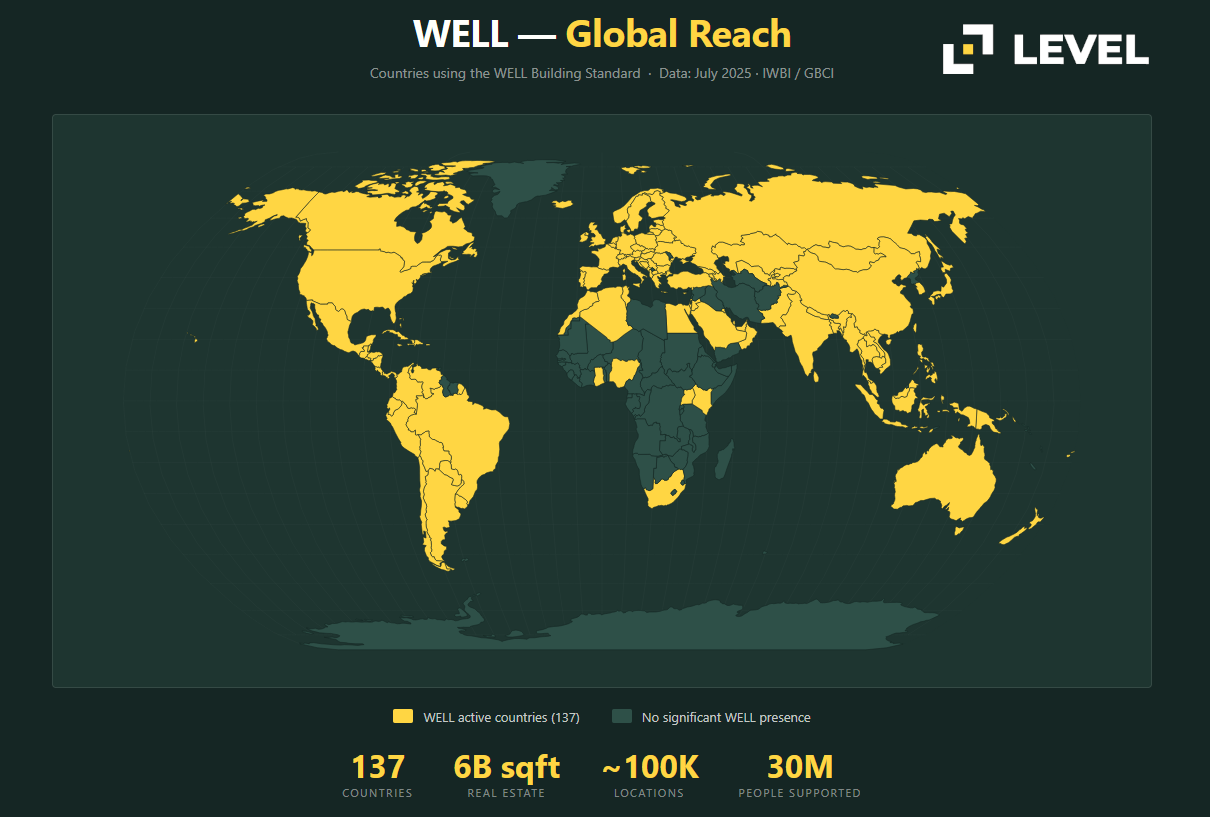
The WELL Building Standard is the world's first building standard focused exclusively on occupant health and wellbeing. Developed by Delos (founded by Paul Scialla) over seven years of research and launched in October 2014 by the International WELL Building Institute (IWBI), WELL is administered by GBCI — the same body that manages LEED certification.
As of July 2025, WELL has surged to more than 6 billion square feet of real estate across nearly 100,000 locations in 137+ countries, supporting approximately 30 million people. This represents a twelve-fold increase since early 2020. Over 180 Fortune and Global 500 companies use WELL, and 29,000 professionals across 135 countries hold or are pursuing the WELL AP credential.
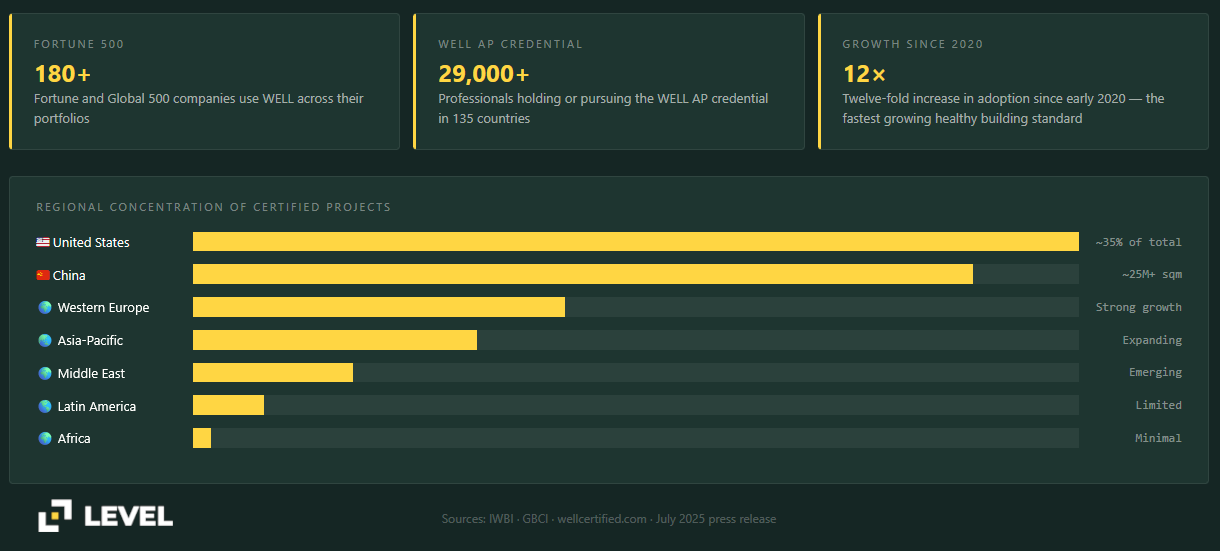
WELL v2 offers four certification levels: Bronze (40 points), Silver (50 points, with minimum 1 point per concept), Gold (60 points, minimum 2 per concept), and Platinum (80 points, minimum 3 per concept). The maximum is 110 points (100 across concepts plus 10 innovation). Recertification is required every three years. Globally, Gold is the most common level achieved (51.6%), followed by Platinum (34.3%), Silver (13.3%), and Bronze (0.8%).
The 10 WELL concepts cover: Air (indoor air quality, ventilation, filtration, monitoring — the concept with the most features), Water (quality, distribution, contaminant thresholds, Legionella control), Nourishment (healthy food environments, nutritional transparency), Light (circadian lighting, daylight design, visual comfort), Movement (cycling infrastructure, walkability, physical activity programs — replacing "Fitness" from v1), Thermal Comfort (HVAC design, individual controls), Sound (acoustic comfort, noise reduction, reverberation), Materials (reduction of hazardous chemical exposure — asbestos, mercury, lead, VOCs), Mind (mental wellbeing, biophilic design, stress reduction, healthy work policies), and Community (healthcare access, social equity, inclusive engagement).
WELL v2 expanded from 7 to 10 concepts, introduced a unified standard for all project types, added the Bronze level (v1 had only Silver, Gold, Platinum), reduced preconditions for greater flexibility (24 preconditions and 84 optimisations), and introduced a LEED-like points system. V2 graduated in Q1 2021, informed by input from the IWBI Task Force on COVID-19 comprising nearly 600 experts from 30 countries.
WELL was explicitly designed to work alongside environmental certifications. BRE and IWBI published a formal alignment crosswalk document in January 2017, identifying BREEAM credits that satisfy WELL features and vice versa. A project achieving a recognised green building certification earns 5 innovation points in WELL. The distinction is fundamental: BREEAM and LEED address the building's environmental impact (energy, carbon, waste, water), while WELL addresses the building's impact on people (health, comfort, productivity). Together they provide a holistic approach.
Notable UK dual-certification examples include 2 Redman Place, International Quarter London (WELL Core Gold + BREEAM Outstanding), The Porter Building, Slough (WELL Gold Core & Shell + BREEAM), and the under-construction Roots in the Sky project targeting BREEAM Outstanding + WELL Platinum.
WELL certification fees include a $3,000 enrollment fee (flat) and a program fee of $0.16 per sq ft ($8,000 minimum, $98,000 cap) for owner-occupied spaces. WELL Core certification (for tenant-occupied buildings) charges $0.10 per sq ft. Performance testing — conducted by an authorised WELL Performance Testing Agent over 1–3 days — adds approximately $10,000+ per test, with at least two tests typically required. Discounts of up to 35% are available for schools, non-profits, and developing markets.
Cundall, One Carter Lane became the first building in the UK and Europe to achieve WELL Certification (Gold) in November 2016, reporting a 19% drop in employee absenteeism within one year at a cost uplift of approximately £200 per head. The Crown Estate at St James's Market became the first in Europe to achieve WELL Platinum in September 2018. Landsec reported a 40% increase in air quality satisfaction and 30% productivity increase after WELL Silver certification of its workspace.

NABERS UK is the UK's first performance-based energy rating system for commercial offices, measuring actual operational energy use rather than theoretical design efficiency. Adapted from Australia's National Australian Built Environment Rating System (developed 1998/99), NABERS UK launched in November 2020 — the first international expansion outside Australia and New Zealand. The scheme was initially funded by 12 major UK property companies including British Land, Derwent London, Landsec, Lendlease, and Grosvenor.
The innovation NABERS addresses is critical. Innovate UK research found non-domestic buildings use on average 3.8 times more energy than predicted at design stage. There is "almost no correlation" between a building's EPC rating and its actual energy performance, and "very little relationship between a BREEAM rating and actual energy performance."
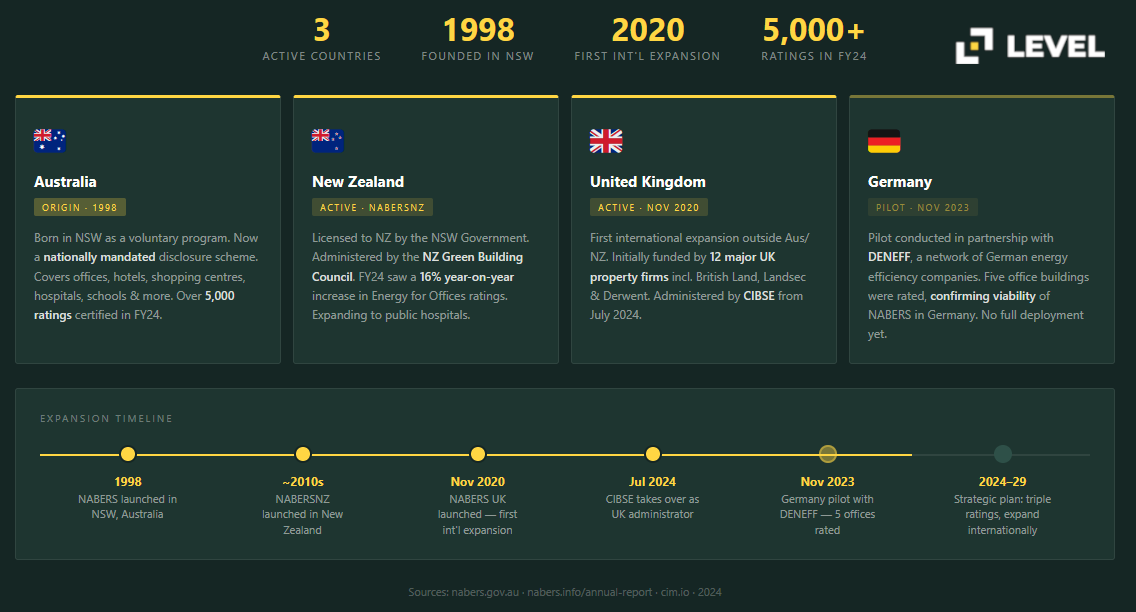
NABERS UK assigns buildings a 1 to 6 star rating based on 12 months of metered energy consumption: 1 star (making a start), 2 stars (below average), 3 stars (average), 4 stars (good), 5 stars (excellent), and 6 stars (market leading — with almost half the greenhouse gas emissions of a 5-star building). Ratings are valid for 12 months, requiring annual reassessment.
The Design for Performance (DfP) pathway is the framework's most innovative element. It operates through five stages: signing a DfP agreement committing to a minimum 4.0 star target, advanced simulation modelling, independent design review, obtaining a licence to promote the target rating, and finally obtaining an actual NABERS Energy Rating after 12 months of operation. In Australia, 91% of DfP buildings met their energy efficiency target, and 36% exceeded it.
Approximately 150 new and refurbished UK office buildings have set NABERS UK Design for Performance targets. BRE was the original UK administrator from launch in 2020, but CIBSE (Chartered Institution of Building Services Engineers) took over in April 2024 after BRE ended its licence to focus on BREEAM.
Notable buildings include Toronto Square, Leeds (Grosvenor) — the first UK building to receive a NABERS Energy rating (4.5 stars, July 2022), and 11 & 12 Wellington Place, Leeds — the first to complete the full DfP process, achieving 5 stars (2025). Timber Square in London was the first new-build to receive a post-design-review 5-star rating. The City of London formally approved plans to require all major office developments to have a minimum NABERS UK rating of 5 stars under its net zero by 2040 framework.
Certification fees are £780 for offices over 1,000m² and £450 for smaller spaces. The full DfP process (including modelling and consultancy) costs approximately £30,000–£40,000. Knight Frank research found offices with NABERS ratings of up to 4.5 stars are worth an average of 8% more than unrated buildings.

SKA Rating is the only environmental assessment method designed specifically for non-domestic fit-outs. Initially developed in 2005 by fit-out contractor Skansen (giving SKA its name), it was taken over by RICS in 2009 and transferred to SKA Rating Ltd (a not-for-profit company) in 2024.
SKA exists because whole-building systems like BREEAM and LEED were deemed unsatisfactory for fit-out projects in terms of high costs and low relevance. This matters: 11% of UK construction spending is on fit-outs, and buildings may have 30–40 fit-outs during their lifecycle.
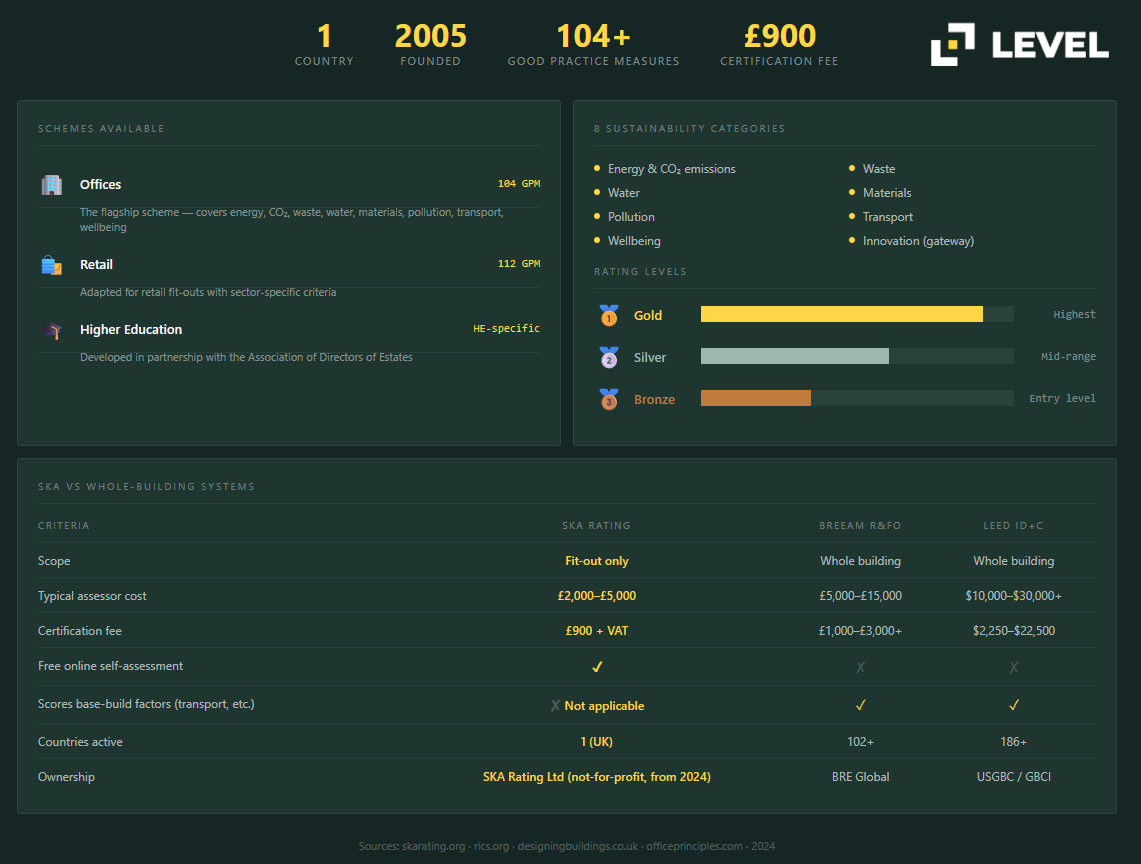
SKA certifies at three levels: Bronze (25–49% of applicable measures), Silver (50–74%), and Gold (75%+). Projects are scored only on measures relevant to their specific scope, with typically 30–60 measures applying from a total of 104 good practice measures across eight categories: Energy & CO2, Waste, Water, Pollution, Transport, Materials, Wellbeing, and Project Delivery.
The assessment has four stages: Scope (custom scorecard creation), Design Assessment (indicative rating), Handover Assessment (evidence collection during construction), and Certification. An optional post-occupancy review can assess performance one year after completion.
SKA is particularly relevant for tenants who don't own or control the whole building but want to demonstrate ESG credentials for their workspace. It can be included in green lease provisions and used to benchmark sustainability across a portfolio. Certification fees are approximately £295 + VAT, with assessor fees typically £2,000–£5,000 depending on complexity — significantly cheaper than whole-building certifications.
The right certification depends on building type, tenant expectations, budget, and organisational goals. Building type is the first filter: new builds have access to all certifications, while tenant fit-outs are best served by SKA or WELL.
Tenant profile matters: multinational or US-headquartered tenants often require LEED, while UK-focused tenants recognise BREEAM.
Budget ranges from under £5,000 (SKA) to £50,000+ (BREEAM Outstanding) before construction uplift costs. Organisational goals determine whether environmental performance (BREEAM/LEED), occupant health (WELL), operational energy (NABERS), or workspace sustainability (SKA) takes priority.
The most effective approach for premium developments is BREEAM + WELL, providing both environmental and health credentials.
Examples include 2 Redman Place (BREEAM Outstanding + WELL Gold) and Roots in the Sky (targeting BREEAM Outstanding + WELL Platinum). BREEAM + NABERS UK is increasingly common for developers who want to demonstrate both design quality and operational performance commitment.
BREEAM + LEED appeals to international trophy assets — White Collar Factory holds both BREEAM Outstanding and LEED Platinum.
BREEAM + WiredScore/SmartScore is gaining traction for technology-forward buildings.
For new-build commercial offices, BREEAM (targeting Excellent or Outstanding) should be the baseline, supplemented by NABERS UK DfP to demonstrate operational performance commitment. Add WELL for tenant attraction or LEED if targeting multinational occupiers.
For major refurbishments, BREEAM Refurbishment & Fit-Out or BREEAM In-Use provide the most relevant frameworks, with NABERS UK valuable for verifying actual performance improvements.
For tenant fit-outs, SKA Rating offers the most cost-effective and relevant assessment, complemented by WELL for occupant health credentials.
For investment portfolios, BREEAM In-Use across the portfolio provides consistent benchmarking, while NABERS UK enables performance tracking year-on-year. GRESB scores, which are increasingly demanded by institutional investors, can draw on data from all these certifications.
Beyond the five core certifications, several emerging standards are gaining UK relevance. WiredScore (digital connectivity) has certified over 4,000 buildings globally since launching in the UK in 2015 as the Mayor of London's Digital Connectivity Rating Scheme, with major landlords including Derwent London, British Land, and Grosvenor achieving certifications. Its sibling SmartScore (smart building certification, launched 2021) is establishing what makes a building "smart" across six functional areas.
Fitwel, developed by the US CDC and GSA, is a more accessible and lower-cost alternative to WELL, with the UK among the top three countries for Fitwel certifications. Over 100 UK properties are registered and 50+ certified. MIT research found Fitwel-certified properties achieve 4.4–7.7% rental premiums. RESET focuses on continuous indoor air quality monitoring, requiring Grade A or Grade B accredited monitors and three consecutive months of meeting performance targets — described as "one of the hardest certifications in the world." ActiveScore rates active travel infrastructure in buildings (cycling facilities, showers), and GRESB provides ESG benchmarking for real estate portfolios.
The UK Net Zero Carbon Buildings Standard, a landmark industry-led initiative launched in 2024, sets science-led limits and targets for different building types, while BREEAM V7's alignment with EU Taxonomy requirements suggests environmental certifications are converging toward common international frameworks.
The direction is clear. JLL states plainly: "Green certifications are becoming less of a differentiator and more of a requirement." In markets heavily saturated with certified buildings, green premiums compress — certification becomes the entry price for competitive stock rather than a premium feature. The BBP Climate Commitment, signed by 35 property owners as of 2025 covering over £380 billion in assets under management and 11,000+ commercial properties, demonstrates institutional commitment at scale.
As Kirsty Draper, Head of Sustainability at JLL UK Agency, summarised: "From a value perspective, there's no doubt that buildings that have a range of market-leading certifications will perform better than buildings that don't." With Central London annual take-up reaching 10.6 million sq ft in 2025 (the best leasing performance in six years), overwhelmingly concentrated in Grade A certified space, the commercial case is settled. The question for UK building owners is no longer whether to pursue certification, but which combination best protects and enhances their asset value in a market that is rapidly bifurcating between future-proofed green stock and stranded brown assets.
Data current as of 2024–2025
Updated 25th Feb 2026
Want to find your next leased, managed or serviced office space to rent? Book a call with our team today.


.jpg)